

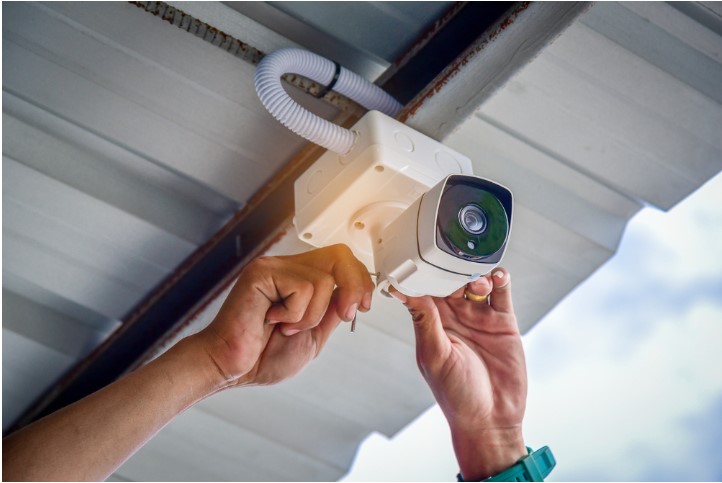
Motion detectors were a more affordable home security enhancement back when wired CCTV cameras were the only game in town. The cameras were expensive enough that only the wealthy could afford them. But modern wireless cameras are relatively inexpensive. Does that mean the motion detector has outlived its usefulness?
In a word, no. There are very good reasons that home security providers, like Vivint Home Security, still offer motion detectors in their whole-home systems. The tried-and-true motion detector is still a useful component.
Its Function Is in the Name
A motion detector’s function is simple enough to understand. It is in the name. The motion detector is a device designed to monitor for movement by way of infrared light, heat signatures, or a number of other technologies. If movement is detected, the device sends a signal to the security system’s central control panel.
An unmonitored security system will respond to this signal with an audible alarm. A monitored system will send alerts to a remote monitoring center, the homeowner, or both.
Some would argue that motion detectors are no longer necessary given the proliferation of low-cost cameras. But in order to achieve the same level of effectiveness, a homeowner would have to install cameras in every room that would otherwise be equipped with motion sensors. Is that realistic?
Why Motion Detectors Still Matter
Motion detectors still matter for one primary reason: they represent yet another layer of security a homeowner can add to his system. And according to Vivint, every additional layer makes a home security system more effective.
Motion detectors are early indicators of intrusion. They can trip alarms, automatically switch on lights, and potentially track an intruder’s movement around a house – as long as they are installed throughout. Although a homeowner could accomplish much the same thing with wireless cameras, motion detectors are still cheaper.
Cameras also tend to have blind spots. They do not offer nearly the same amount of coverage. Motion detectors provide coverage for those blind spots. So even if a camera does not pick up movement and begin recording, a motion sensor will recognize that movement and trigger an alarm.
Another Advantage Over Cameras
Motion detectors have another advantage over cameras: speed. The sensors built into motion detectors are designed to be fast and reliable. They can pick up on motion more quickly than most cameras. As for cameras, they are more about visibility and evidence. Their motion sensors do not tend to be as sensitive because vendors don’t want cameras turning on and recording unless there is a legitimate security concern.
The fact that video cameras can be seen works in a homeowner’s favor in that they act as deterrents. But a determined burglar might very well attempt to disable a wireless camera by pulling it from the wall or spray-painting the lens. Another advantage of the motion detector is that it is more discreet. A burglar needs to look harder to find motion detectors. And by the time one is discovered and disabled, it has already done its job.
It’s Not One or the Other
The big takeaway here is that motion detectors and video cameras do not represent an either-or scenario. There is no need to choose between them. And in fact, it is better to use both.
Motion detectors are still an important component in comprehensive home security. They add another layer of security by continually monitoring for motion and triggering an alarm when it’s detected. When it comes to stopping intruders in their tracks, you can never have too many layers. At least that is my take on it.